
LIVERPOOL - MARITIME, EMIGRATION & SLAVERY
Albert Dock and Mersyside Museums
 Liverpool
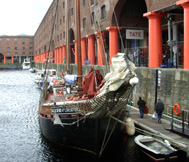
has been northwest’s England’s most importance
shipping center since the first docks were built on the Mersey River
in 1715. The “Old Dock” as it is now called was the first
enclosed shipping dock in the world. The Mersey River tide can change
as much as 33 feet, so deep docks became were necessary as ships grew
larger. In 1845 the Albert Dock opened on the western city side of the
river. It was the latest design of enclosed dock with warehouses surrounding
a center harbor. Originally built for sailing ships, as the age of steam
dawned and ships grew ever larger, the
Liverpool
has been northwest’s England’s most importance
shipping center since the first docks were built on the Mersey River
in 1715. The “Old Dock” as it is now called was the first
enclosed shipping dock in the world. The Mersey River tide can change
as much as 33 feet, so deep docks became were necessary as ships grew
larger. In 1845 the Albert Dock opened on the western city side of the
river. It was the latest design of enclosed dock with warehouses surrounding
a center harbor. Originally built for sailing ships, as the age of steam
dawned and ships grew ever larger, the 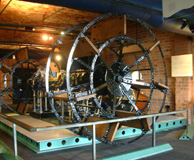 Albert
Dock’s entrance was
too narrow for steamer paddle wheels. By 1860 the dock was already obsolete
and survived only for its warehouses. In WWII the dock had a revival
as a base for escort ships in the Battle of the Atlantic, but was completely
abandoned in 1971, until being reborn in 1980 as the home of Liverpool’s
nautical history with the establishment of the Merseyside Maritime Museum.
Today, the Albert Dock is Liverpool’s most visited tourist attraction.
The Albert Dock has several museums and exhibit spaces taking up the
former warehouses. The Liverpool branch of the Tate Art Museum, the Beatles
Story exhibition (see Liverpool
Beatles Town) as well as restaurants
and bars where a good portion of a day out in Liverpool can be spent.
Albert
Dock’s entrance was
too narrow for steamer paddle wheels. By 1860 the dock was already obsolete
and survived only for its warehouses. In WWII the dock had a revival
as a base for escort ships in the Battle of the Atlantic, but was completely
abandoned in 1971, until being reborn in 1980 as the home of Liverpool’s
nautical history with the establishment of the Merseyside Maritime Museum.
Today, the Albert Dock is Liverpool’s most visited tourist attraction.
The Albert Dock has several museums and exhibit spaces taking up the
former warehouses. The Liverpool branch of the Tate Art Museum, the Beatles
Story exhibition (see Liverpool
Beatles Town) as well as restaurants
and bars where a good portion of a day out in Liverpool can be spent.
Merseyside Maritime Museum and Great Ships
 The
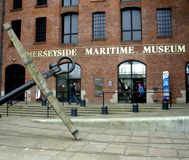
Merseyside Maritime Museum presents treasure collection of the history
of ships and shipping on
the Mersey
and several specialized galleries.
The first floor tells the story of seafaring’s most tragic ocean
liners The Titanic, The Lusitania and the Empress of Ireland.
The
Merseyside Maritime Museum presents treasure collection of the history
of ships and shipping on
the Mersey
and several specialized galleries.
The first floor tells the story of seafaring’s most tragic ocean
liners The Titanic, The Lusitania and the Empress of Ireland. 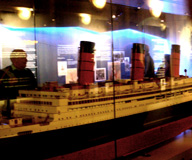 Liverpool
was the home port of the English passenger shipping companies the White
Star Line and Cunard. The list of the missing crew was read
to the city from the balcony of the White Star headquarters. The exhibit
includes the original builder’s model of the Titanic as well as
some remaining artifacts. Liverpool was home port to the Queen Mary and
two Queen Elizabeths of the Cunard Line and the QE II will make its last
call to port in 2008.
Liverpool
was the home port of the English passenger shipping companies the White
Star Line and Cunard. The list of the missing crew was read
to the city from the balcony of the White Star headquarters. The exhibit
includes the original builder’s model of the Titanic as well as
some remaining artifacts. Liverpool was home port to the Queen Mary and
two Queen Elizabeths of the Cunard Line and the QE II will make its last
call to port in 2008.
Battle of the Atlantic
The Battle of the Atlantic gallery explores Liverpool’s role as the merchant navy’s headquarters of Britain’s North Atlantic campaign in World War Two and primary merchant shipping port. The exhibits examines the role of the German U-boats in attacks on the trans-Atlantic convoys and some of the more interesting exhibits are the navigation and controls remain from ships, providing some hands on experience. On the second floor of the museum is a gallery of seafaring and nautical art depicting the great ships of sail and steam.
Seized! Revenue and Customs
A brand new exhibit at the museum is on smuggling and revenue enforcement. It is the only museum of Her Majesty’s Revenue and Customs ministry telling the story of contraband seizures and the constant battle to collect taxes and duties and those throughout history that have tried curious ways to avoid them (see Saltburn Smugglers).
Emigration Gallery
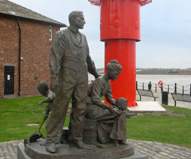 Liverpool
was one of the major centers of emigration. Millions of emigrants left
England’s northern port for America’s
shores, coming from other lands throughout Europe. One of my ancestors
from Wales probably
sailed from the here in the 1850s, a Mormon. In fact the port of Liverpool
played such a role in immigration, the Mormon church of America has erected
a stature of a family looking forward to a journey to the west. For ancestry
searchers Liverpool might be an important stop on the backward journey.
Liverpool
was one of the major centers of emigration. Millions of emigrants left
England’s northern port for America’s
shores, coming from other lands throughout Europe. One of my ancestors
from Wales probably
sailed from the here in the 1850s, a Mormon. In fact the port of Liverpool
played such a role in immigration, the Mormon church of America has erected
a stature of a family looking forward to a journey to the west. For ancestry
searchers Liverpool might be an important stop on the backward journey.
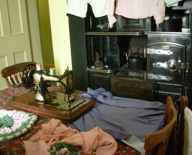 The
museum exhibits of the Merseyside Maritime Museum also include the
Piermaster's House, for look at the
living quarters of the master of
docks as it would have been in at the start of WWII with the blackout
clock still on the wall. The dry dock across from the museum holds
two historic vessels the
Edmund
Gardner
a Mersey
River pilot boat and the three-masted schooner the De Wadden.
The
museum exhibits of the Merseyside Maritime Museum also include the
Piermaster's House, for look at the
living quarters of the master of
docks as it would have been in at the start of WWII with the blackout
clock still on the wall. The dry dock across from the museum holds
two historic vessels the
Edmund
Gardner
a Mersey
River pilot boat and the three-masted schooner the De Wadden.
International Slavery Museum
Liverpool was a major connection in the American slave trade of the 1700-1800’s. Known as the Triangle Trade, following the Atlantic currents, black slaves would be brought from Africa to the West Indies where the ships would loaded with rum sails to England then back to Africa for more human cargo. The Slavery Museum presents the story of the transatlantic slavery in a historic and modern context for understanding the legacy of human enslavement. The first exhibit space for the slavery museum opened in 2007 with more planned in the future.
The docks area around Albert Dock is undergoing some major reconstruction work for the next few years so some of the outdoor exhibits may not be accessible at times. The museums are open every day except Christmas from 10am to 5pm and admission to Merseyside Maritime and National Museums is free. © Bargain Travel Europe
Find Best Hotel and Travel Deals in Liverpool on TripAdvisor
Web Info
Liverpool National
Museums
These articles are copyrighted and the sole property of Bargain Travel Europe and WLPV, LLC. and may not be copied or reprinted without permission.
See Also:
LIVERPOOL GREEK AND RUSSIAN RESTAURANTS
MANCHESTER MUSEUM OF SCIENCE & INDUSTRY

