


MARY SHELLEY TOURING IN
LONDON
St. Pancras and the real “birth” of Frankenstein
 With
the refurbishing of St. Pancras Station in London into the new international
rail terminal for the Eurostar to Paris, this part of London
which had been long fading into a working world stop on the London Underground
is now finding itself a magnet for tourists and business travelers catching
the high speed train to the continent. Yet,
since now spending some idle time on St Pancras road, what is there to
do aside from getting a coffee at the Starbucks next door or collecting
tourist tickets and SIM cards at the tourism center across the street?
With
the refurbishing of St. Pancras Station in London into the new international
rail terminal for the Eurostar to Paris, this part of London
which had been long fading into a working world stop on the London Underground
is now finding itself a magnet for tourists and business travelers catching
the high speed train to the continent. Yet,
since now spending some idle time on St Pancras road, what is there to
do aside from getting a coffee at the Starbucks next door or collecting
tourist tickets and SIM cards at the tourism center across the street?
 Go
on a search for literary and historical figures, whether real or imaginary, first stop, the British Libary, next to King's Cross and explore historic manuscripts (see British Museum Treasures Gallery).
Take the bus a few stops to the Madame Tussaud’s Wax Museum,
always crowded as one of London’s top tourist stops. Stroll to
the entirely tourism created Sherlock Holmes Museum at 221b Baker Street (see Sherlock Holmes Museum),
a location
having nothing to do with the character other than an address in the
Conan Doyle stories which up until the late 1970’s was a dilapidated
row house.
Go
on a search for literary and historical figures, whether real or imaginary, first stop, the British Libary, next to King's Cross and explore historic manuscripts (see British Museum Treasures Gallery).
Take the bus a few stops to the Madame Tussaud’s Wax Museum,
always crowded as one of London’s top tourist stops. Stroll to
the entirely tourism created Sherlock Holmes Museum at 221b Baker Street (see Sherlock Holmes Museum),
a location
having nothing to do with the character other than an address in the
Conan Doyle stories which up until the late 1970’s was a dilapidated
row house.
 Or go in search
for a real ”birthplace” of the
Frankenstein monster. Okay, so the monster is a creation of literature,
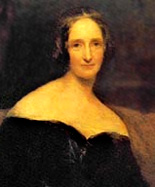
famously written by a 19 year old Mary Wollstonecraft Shelley while on
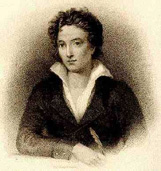
a European tour to Switzerland with her not-yet-husband Percy Bysshe
Shelley (see Frankenstein
Village). In an introduction to the Frankenstein
novel, written with a later publishing Mary Shelley says the story came
to her in a “dream” while staying in a house on Lake Geneva
as part of a wager among the literati of Lord Byron, Percy Bysshe Shelley
and John Polidori (see Byron
Villa on Lake Geneva).
Or go in search
for a real ”birthplace” of the
Frankenstein monster. Okay, so the monster is a creation of literature,
famously written by a 19 year old Mary Wollstonecraft Shelley while on
a European tour to Switzerland with her not-yet-husband Percy Bysshe
Shelley (see Frankenstein
Village). In an introduction to the Frankenstein
novel, written with a later publishing Mary Shelley says the story came
to her in a “dream” while staying in a house on Lake Geneva
as part of a wager among the literati of Lord Byron, Percy Bysshe Shelley
and John Polidori (see Byron
Villa on Lake Geneva).
Secret Memoirs of Mary Shelley Audiobook
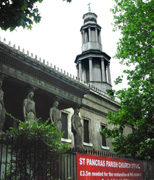 The
real story behind literature's great gothic icon was even more a gothic
soap opera than the book itself.
The already famous poet Shelley first
met Mary Godwin in London when she was sixteen, while visiting with her
father, the writer and anarchist philosopher William Godwin who lived
at 41 Skinner Street several blocks east from the New St Pancras Parish
Church
on Euston
Road. Mary’s mother Mary Wollstonecraft, a well known woman’s
rights reformer and author died at Mary’s birth in 1797. Mary and
Shelley spent time together taking walks to visit her mother’s
grave, usually chaperoned, but they very possibly made love for the
first time among the gravestones of
the Old St.
Pancras
Church graveyard on July 28th, 1814, the date Mary Shelley always considered
the anniversary of their "union", after which they fled for
Dover and Paris (Mary Shelley Frankenstein Diaries). You can visit the grave marker of Mary Wollstonecraft but the actual grave has been moved.
The
real story behind literature's great gothic icon was even more a gothic
soap opera than the book itself.
The already famous poet Shelley first
met Mary Godwin in London when she was sixteen, while visiting with her
father, the writer and anarchist philosopher William Godwin who lived
at 41 Skinner Street several blocks east from the New St Pancras Parish
Church
on Euston
Road. Mary’s mother Mary Wollstonecraft, a well known woman’s
rights reformer and author died at Mary’s birth in 1797. Mary and
Shelley spent time together taking walks to visit her mother’s
grave, usually chaperoned, but they very possibly made love for the
first time among the gravestones of
the Old St.
Pancras
Church graveyard on July 28th, 1814, the date Mary Shelley always considered
the anniversary of their "union", after which they fled for
Dover and Paris (Mary Shelley Frankenstein Diaries). You can visit the grave marker of Mary Wollstonecraft but the actual grave has been moved.
Mary was “disowned” by her father after his discovery of her affair with the married poet, evidenced by her pregnancy. Her first child died two months after being born following their first trip to Europe (see Rhine Falls Schaffhausen). The second European tour when the famous weekend on Lake Geneva took place was after the birth of their second child, a son. Shelly left his wife to go to Switzerland with Mary and her step sister Claire (Jane) Claremont. Shelley’s wife, Harriet pregnant by another man, committed suicide by drowning herself in the Serpentine creek in Hyde Park. Shelley and Mary married in December when she became Mary Shelley, taking her mother's maiden name Wollstonecraft.
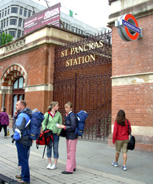 The
heart of the Frankenstein novel is as much a reflection on the darker
nature of man than on its namesake monster, and seems to have come from
the mind of a brilliant woman still a teenager in the crucible mixture
of sex and graveyards, childbirth and death and the heady swirl of philosophical
free thinkers and literary explorers of the early 19th Century. Mary
Shelley's mother's grave and remains were removed from the cemetery at
St Pancras to make way
for the track of the original St Pancras Rail
Station in the 1860's. Even more of the cemetery of the Old St Pancras
Church were removed with great controversy for the reconstruction and
modernization of the Eurostar Terminal at St. Pancras (see Eurostar
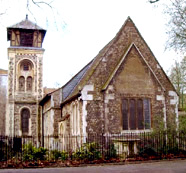
London-Paris). The Old St Pancras
Church originally gothic was one of the oldest in London, though the
current one was rebuilt in Victorian times and sort of forgotten over
time. It can be found on St Pancras Road behind the new terminal and
the new British library.
The
heart of the Frankenstein novel is as much a reflection on the darker
nature of man than on its namesake monster, and seems to have come from
the mind of a brilliant woman still a teenager in the crucible mixture
of sex and graveyards, childbirth and death and the heady swirl of philosophical
free thinkers and literary explorers of the early 19th Century. Mary
Shelley's mother's grave and remains were removed from the cemetery at
St Pancras to make way
for the track of the original St Pancras Rail
Station in the 1860's. Even more of the cemetery of the Old St Pancras
Church were removed with great controversy for the reconstruction and
modernization of the Eurostar Terminal at St. Pancras (see Eurostar
London-Paris). The Old St Pancras
Church originally gothic was one of the oldest in London, though the
current one was rebuilt in Victorian times and sort of forgotten over
time. It can be found on St Pancras Road behind the new terminal and
the new British library.
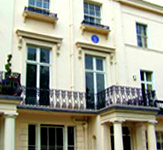 To
see the London house Mary Wollstonecraft Shelley later lived for
most of her life after Shelley's
death in 1822
and where she died, hop on the tube at Kings Cross and take the Victoria
Line to Victoria Station. The Mary Shelley House is a few blocks west
of the Victoria Place Shopping Mall on Chester Square off Eccelstone
Street. It's a private residence, so no visiting, unfortunately. A bit farther out of town, near Reading is the house Mary
and Percy Shelley rented in 1816-17,
Albion House in Marlow, Buckinghamshire. Mary Wollstonecraft Shelley
is buried with her
mother
and father
in the church
graveyard
in Bournemouth
at
St.
Peter's
Church,
moved
there
by her
son Sir Percy Shelley. Percy Bysshe Shelley is buried in Rome, at
least his
ashes. © Bargain
Travel Europe
To
see the London house Mary Wollstonecraft Shelley later lived for
most of her life after Shelley's
death in 1822
and where she died, hop on the tube at Kings Cross and take the Victoria
Line to Victoria Station. The Mary Shelley House is a few blocks west
of the Victoria Place Shopping Mall on Chester Square off Eccelstone
Street. It's a private residence, so no visiting, unfortunately. A bit farther out of town, near Reading is the house Mary
and Percy Shelley rented in 1816-17,
Albion House in Marlow, Buckinghamshire. Mary Wollstonecraft Shelley
is buried with her
mother
and father
in the church
graveyard
in Bournemouth
at
St.
Peter's
Church,
moved
there
by her
son Sir Percy Shelley. Percy Bysshe Shelley is buried in Rome, at
least his
ashes. © Bargain
Travel Europe
Find
best hotel and vacation deals in London on
TripAdvisor
Web Info
Victorian Times
These articles are copyrighted and the sole property of Bargain Travel Europe andWLPV, LLC. and may not be copied or reprinted without permission.
See Also:
PERCY SHELLEY OXFORD WALKING TOUR
MARY SHELLEY GRAVE BOURNEMOUTH

