

JERPOINT
ABBEY
Cistercian Monastery Ruins Near Kilkenny
 Abbey ruins
are the roadside attraction of Ireland. You’re likely
to come across the moody wreckage of thousand year old stone work while
diving through the countryside. Some are in the back yards of hotels
(see Abbey
Hotel Roscommon ) and even one behind a
brewery in Kilkenny (see Smithwick’s
Brewery Tour). Just south of Kilkenny, 3 miles
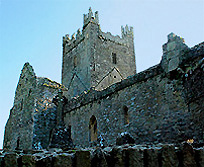
from the town of Thomastown the ruins of the Jerpoint Abbey are one
of the most detailed remains of monastic life. The present abbey was
built in 1180 by Donogh O'Donoghoe, the King of Ossary to house the
order of Cistercians he relocated from another site, replacing an
earlier structure founded by Domnall Mac Gilla Patraic in 1158, who
he succeeded, and probably an even earlier monastic enclave from date
unknown.
Abbey ruins
are the roadside attraction of Ireland. You’re likely
to come across the moody wreckage of thousand year old stone work while
diving through the countryside. Some are in the back yards of hotels
(see Abbey
Hotel Roscommon ) and even one behind a
brewery in Kilkenny (see Smithwick’s
Brewery Tour). Just south of Kilkenny, 3 miles
from the town of Thomastown the ruins of the Jerpoint Abbey are one
of the most detailed remains of monastic life. The present abbey was
built in 1180 by Donogh O'Donoghoe, the King of Ossary to house the
order of Cistercians he relocated from another site, replacing an
earlier structure founded by Domnall Mac Gilla Patraic in 1158, who
he succeeded, and probably an even earlier monastic enclave from date
unknown.
 The
Cistercians, also known as Trappist or White Monks were a strict
order of Benedictines,
originating in France (see Abbey
Fontenay),
who rejected the liberalizations of the Benedictines and avowed to
return to literal
observance of the Rule of St Benedict, devoted replicating life to
austerity. The Cistercians supported themselves through Cistercian
life focused on daily manual labor and self-sufficiency, with many
abbeys supported themselves through agriculture and brewing (see Trappist
Beer Belgium). The Cistercians grew very influential in
medieval life and spread throughout Europe through their most noted
adherent St Bernard
of Clairvaux (see St
Bernard's Miracle of the Milk) and his connection
with the Templar Knights, with their order superceding many Benedictines.
The
Cistercians, also known as Trappist or White Monks were a strict
order of Benedictines,
originating in France (see Abbey
Fontenay),
who rejected the liberalizations of the Benedictines and avowed to
return to literal
observance of the Rule of St Benedict, devoted replicating life to
austerity. The Cistercians supported themselves through Cistercian
life focused on daily manual labor and self-sufficiency, with many
abbeys supported themselves through agriculture and brewing (see Trappist
Beer Belgium). The Cistercians grew very influential in
medieval life and spread throughout Europe through their most noted
adherent St Bernard
of Clairvaux (see St
Bernard's Miracle of the Milk) and his connection
with the Templar Knights, with their order superceding many Benedictines.
 The
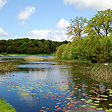
Jerpoint Abbey flourished in the middle ages with its own gardens,
granary
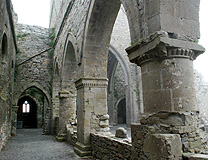
and watermills, set along on the River Arrigle. The oldest
parts of the abbey are Romanesque transepts and chancel, later sections
are early Gothic with pointed arches. On the walls are the faded remains
of medieval painting reminiscent of illustrated manuscripts. The
abbey
was the site of burials
of abbots and secular wealthy gentry alike over the centuries.
The
Jerpoint Abbey flourished in the middle ages with its own gardens,
granary
and watermills, set along on the River Arrigle. The oldest
parts of the abbey are Romanesque transepts and chancel, later sections
are early Gothic with pointed arches. On the walls are the faded remains
of medieval painting reminiscent of illustrated manuscripts. The
abbey
was the site of burials
of abbots and secular wealthy gentry alike over the centuries.
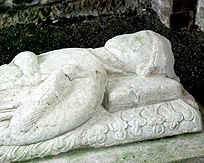 In the
year 1202 Felix O'Dullany the Bishop of Ossory, was interred. His
tomb effigy remains in the 15th Century main tower, moved from its
original
spot. It was believed the pilgrims touching the bishops face could
be cured of ills. Of the effigy today, the face is almost completely
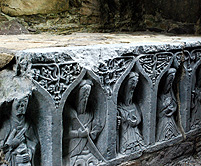
worn away, from the gentle touch countless fingers. Also of interest
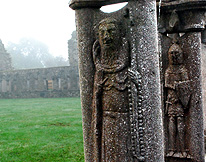
are the pieces of tomb pedestals surrounded by carved saints as weepers,
each identified by their symbol. The ornately carved cloister is
worth a close-up look at the figures of medieval imagery, knights
and clergy,
beautifully framing the mystic monastery often shrouded in foggy
mist from the banks of the river. Stairs to the roof can be climbed
for
an upper view of the layout and surrounding countryside.
In the
year 1202 Felix O'Dullany the Bishop of Ossory, was interred. His
tomb effigy remains in the 15th Century main tower, moved from its
original
spot. It was believed the pilgrims touching the bishops face could
be cured of ills. Of the effigy today, the face is almost completely
worn away, from the gentle touch countless fingers. Also of interest
are the pieces of tomb pedestals surrounded by carved saints as weepers,
each identified by their symbol. The ornately carved cloister is
worth a close-up look at the figures of medieval imagery, knights
and clergy,
beautifully framing the mystic monastery often shrouded in foggy
mist from the banks of the river. Stairs to the roof can be climbed
for
an upper view of the layout and surrounding countryside.
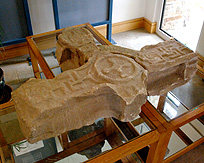 Inside the visitor's center is a piece of a Celtic cross with serpent
and swastika motifs from the 9th Century, the Kilkieren High Cross,
one of four pieces found at the abbey, dating from the early Christian
era, moved at some time in the long distant past from the graveyard
of Kilkieran where the lower part of the tall shaft still stands.
The cemetery outside the chapel of Jerpoint holds ancient moss and
lichen
covered gravestones of time obliterated names.
Inside the visitor's center is a piece of a Celtic cross with serpent
and swastika motifs from the 9th Century, the Kilkieren High Cross,
one of four pieces found at the abbey, dating from the early Christian
era, moved at some time in the long distant past from the graveyard
of Kilkieran where the lower part of the tall shaft still stands.
The cemetery outside the chapel of Jerpoint holds ancient moss and
lichen
covered gravestones of time obliterated names.
 The
abbey’s monastic existence ended in 1541 with the Dissolution
of the Monasteries by Henry VIII, and the Holy order's lands granted
to James Butler the 9th Earl of Ormand (see Kilkenny
Castle). A small town of Jerpoint
which supported the abbey pretty much died out by the 1700s and the
property named a national monument as early as 1880. Jerpoint
Abbey is next
to the luxury hotel, golf resort and horse farm of Mount Juliet
which occupies much of the land which once belonged to the
abbey (see Mount
Juliet), with a Trout Farm fishery and the Jerpoint
glass works nearby attractions
(see Jerpoint
Glass Studio). The Jerpoint Abbey House B&B is
across the street (see Abbey
House Thomastown).
The
abbey’s monastic existence ended in 1541 with the Dissolution
of the Monasteries by Henry VIII, and the Holy order's lands granted
to James Butler the 9th Earl of Ormand (see Kilkenny
Castle). A small town of Jerpoint
which supported the abbey pretty much died out by the 1700s and the
property named a national monument as early as 1880. Jerpoint
Abbey is next
to the luxury hotel, golf resort and horse farm of Mount Juliet
which occupies much of the land which once belonged to the
abbey (see Mount
Juliet), with a Trout Farm fishery and the Jerpoint
glass works nearby attractions
(see Jerpoint
Glass Studio). The Jerpoint Abbey House B&B is
across the street (see Abbey
House Thomastown).
Visiting Jerpoint Abbey
Jerpoint Abbey is 12 miles south from Kilkenny off the N9 primary road, 2.5 km south west from Thomastown on Mill Street from Knocktopher Commons. The abbey has a visitor’s center with guided tours and audio guides available. © Bargain Travel Europe
Find best hotel and travel deals in Ireland on TripAdvisor
Web
Info
Discover
Ireland
These articles are copyrighted and the sole property of Bargain Travel Europe and WLPV, LLC. and may not be copied or reprinted without permission.
SEE ALSO:
ST AUDOEN’S NORMAN CHURCH - DUBLIN

