
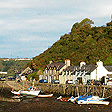


OYSTERMOUTH
CASTLE - MUMBLES
Norman Castle of Lords of Gower
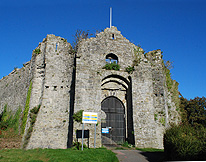 Oystermouth
Castle, a medieval fortress from the Norman era which stands on a height
above the coastal tourist village of Mumbles on Swansea Bay
reopened to the public in 2011 with the final phase in 2013. Oystermouth Castle was the first defensive castle built by the Normans
on the Gower peninsula by William of London (Guillaume de Londres) in
1106 after the invasion by William the Conqueror. The original wood and
earthen castle was burned to the ground, rebuilt and burned again in
1116 and 1137 during revolts of the Welsh princes of Deheubarth and eventually
held by Llywelyn the Great until 1220 when the local clans were driven
from peninsula under the Plantagenet king, Henry III.
Oystermouth
Castle, a medieval fortress from the Norman era which stands on a height
above the coastal tourist village of Mumbles on Swansea Bay
reopened to the public in 2011 with the final phase in 2013. Oystermouth Castle was the first defensive castle built by the Normans
on the Gower peninsula by William of London (Guillaume de Londres) in
1106 after the invasion by William the Conqueror. The original wood and
earthen castle was burned to the ground, rebuilt and burned again in
1116 and 1137 during revolts of the Welsh princes of Deheubarth and eventually
held by Llywelyn the Great until 1220 when the local clans were driven
from peninsula under the Plantagenet king, Henry III.
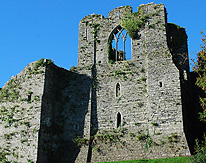 Through the 13th
Century the castle was occupied and rebuilt by John de Braose, Lord of
Gower who expanded the family’s land holdings and titles on the
Welsh Marches. The de Braoses rebuilt the castle in its present stone
shape with a high curtain wall, residential buildings, and chapel in
the later Gothic style seen in the elegant windows contrasted to the
unadorned stonework of the walls. Edward I stayed at Oystermouth briefly
on his tours through Wales in 1284 and the height of its glory. But by
1331, the Lords of Gower moved on the castle lost its importance throughout
the 14th Century and later falling into ruin. A survey of castles in
1650 listed the structure as old, decayed and of no use “but of
pleasant situation” pictured in the romantic English art of the
18th Century (see Laugharne Castle). It was restored to some of its former
style in the 1840s under the influence of George Grant Francis and 1927,
granted to the Swansea council by its last owner, the Duke of Beaufort.
Through the 13th
Century the castle was occupied and rebuilt by John de Braose, Lord of
Gower who expanded the family’s land holdings and titles on the
Welsh Marches. The de Braoses rebuilt the castle in its present stone
shape with a high curtain wall, residential buildings, and chapel in
the later Gothic style seen in the elegant windows contrasted to the
unadorned stonework of the walls. Edward I stayed at Oystermouth briefly
on his tours through Wales in 1284 and the height of its glory. But by
1331, the Lords of Gower moved on the castle lost its importance throughout
the 14th Century and later falling into ruin. A survey of castles in
1650 listed the structure as old, decayed and of no use “but of
pleasant situation” pictured in the romantic English art of the
18th Century (see Laugharne Castle). It was restored to some of its former
style in the 1840s under the influence of George Grant Francis and 1927,
granted to the Swansea council by its last owner, the Duke of Beaufort.
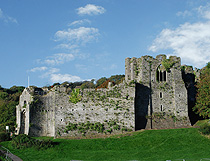 The first phase of the restoration features the visitors center with
interpretation panels to bring the castles past to life, restored castle
wall and inner ward, and most especially the visitors view from a 30
ft high glass enclosed bridge of the Alina’s Chapel, reputedly
the finest medieval castle chapel of its time in south Wales built for
Aline de Braose, daughter of the last lord de Braose on her marriage
to John de Mowbray, which hasn’t been seen by the public for a
hundred and fifty years.
The first phase of the restoration features the visitors center with
interpretation panels to bring the castles past to life, restored castle
wall and inner ward, and most especially the visitors view from a 30
ft high glass enclosed bridge of the Alina’s Chapel, reputedly
the finest medieval castle chapel of its time in south Wales built for
Aline de Braose, daughter of the last lord de Braose on her marriage
to John de Mowbray, which hasn’t been seen by the public for a
hundred and fifty years.
Visiting Oystermouth Castle
The castle is open April through September from 11am to 5pm. Admission is £2.50 for Adults, £1.50 for Students and Seniors, Chilfren under 5 are free. A Family Ticket is £6. © Bargain Travel Europe
Compare hotel and travel deals in Mumbles on TripAdvisor
Web Info
Swansea
- Oystermouth Castle
These articles are copyrighted and the sole property of Bargain Travel Europe and WLPV, LLC. and may not be copied or reprinted without permission.
SEE ALSO:
CAERPHILLY
CASTLE
LLANGYFELACH PARISH ST DAVID'S CHURCH

