
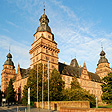

LIMES GERMANICUS - ROMAN HISTORY IN GERMANY
The German Limes Road - Border Forts and Museums
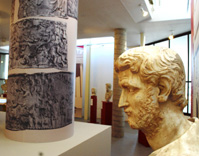 The Roman Empire stretched from North Africa to Britannia
and across the Alps into France and Germany, but Rome’s fiercest
enemy never quite conquered were the Germanic Celt tribes of Northern
Europe. After devastating losses in the battle of Teutorburg Forest in
9 A.D, Caesar Augustus began constructing a wall and series of fortresses
which would form the northern frontier of the empire in Germanica, the
Limes (limits/frontier). The border of Rome's influence would include
the major rivers of southern and western Germany, following the Danube
(Donau) and Neckar in the south and the Rhine. The Roman
border through Germany was not a stone wall like Hadrian’s Wall
in the
The Roman Empire stretched from North Africa to Britannia
and across the Alps into France and Germany, but Rome’s fiercest
enemy never quite conquered were the Germanic Celt tribes of Northern
Europe. After devastating losses in the battle of Teutorburg Forest in
9 A.D, Caesar Augustus began constructing a wall and series of fortresses
which would form the northern frontier of the empire in Germanica, the
Limes (limits/frontier). The border of Rome's influence would include
the major rivers of southern and western Germany, following the Danube
(Donau) and Neckar in the south and the Rhine. The Roman
border through Germany was not a stone wall like Hadrian’s Wall
in the 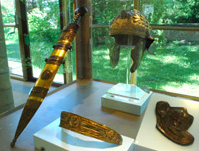 north of England (see Touring
Hadrian’s Wall) but mostly earthen
and wood construction with stone forts and outposts at strategic points.
The German Limes Route is a signposted tourist route
which follows the Limes sites from Rheinbrohl-Bad
Hönningen
in the north to Regensburg in Bavaria. The Limes Route is a UNESCO World
Heritage site encompassing more than 70 towns and villages along the
path, with a whole collection of excavation sites, forts, reconstructed
towers and museums. Visiting the German Limes Route sites along 340
miles through the German forests depends on where you intend to be in
Germany and can
be combined with other tourist routes and activities.
north of England (see Touring
Hadrian’s Wall) but mostly earthen
and wood construction with stone forts and outposts at strategic points.
The German Limes Route is a signposted tourist route
which follows the Limes sites from Rheinbrohl-Bad
Hönningen
in the north to Regensburg in Bavaria. The Limes Route is a UNESCO World
Heritage site encompassing more than 70 towns and villages along the
path, with a whole collection of excavation sites, forts, reconstructed
towers and museums. Visiting the German Limes Route sites along 340
miles through the German forests depends on where you intend to be in
Germany and can
be combined with other tourist routes and activities.
Roman Limit Museum Aalen Baden-Wurttemburg
 In
the south the Limes Route is crossed by the Romantic Road through Baden-Wurttemburg
and Franconia (see Germany's
Romantic Road)
and Limes artifact sites wind along the Limes Road through the Altmuhtal
Nature Park of Bavaria. At Aalen, the Limes
Museum is located
where the largest Roman Fort north of the Alps once protected the lush
Danube
River plain.
In
the south the Limes Route is crossed by the Romantic Road through Baden-Wurttemburg
and Franconia (see Germany's
Romantic Road)
and Limes artifact sites wind along the Limes Road through the Altmuhtal
Nature Park of Bavaria. At Aalen, the Limes
Museum is located
where the largest Roman Fort north of the Alps once protected the lush
Danube
River plain. 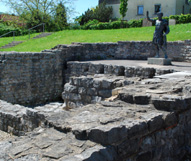 The museum houses
exhibits of excavated artifacts from the Aalen site and fort at Rainau-Buch,
with
a large collection of Roman sandals, coins, gold and silver jewelry and
decorations. On the site behind the
museum
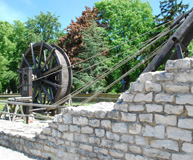
are the excavated wall foundations of the fort and support buildings,
along with a reconstructed archery catapult and a Roman treadwheel crane.
The museum houses
exhibits of excavated artifacts from the Aalen site and fort at Rainau-Buch,
with
a large collection of Roman sandals, coins, gold and silver jewelry and
decorations. On the site behind the
museum
are the excavated wall foundations of the fort and support buildings,
along with a reconstructed archery catapult and a Roman treadwheel crane.
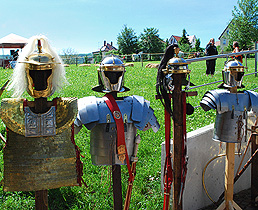
 For living history, especially of interest
to kids,
a reconstructed Roman Army Barracks offers demonstrations of Roman life
with live enactors playing the part of Roman soldiers and allowing dress-up
in Roman costume. Special Roman Days family events are held through the
summer months with equestrian and military demonstrations.To the east
of Aalen
the Limes Road runs through the Altmuhltal
Nature Park along the Rhine-Danube
canal with several former outposts, to the museum at Kelheim near Regensburg.
For living history, especially of interest
to kids,
a reconstructed Roman Army Barracks offers demonstrations of Roman life
with live enactors playing the part of Roman soldiers and allowing dress-up
in Roman costume. Special Roman Days family events are held through the
summer months with equestrian and military demonstrations.To the east
of Aalen
the Limes Road runs through the Altmuhltal
Nature Park along the Rhine-Danube
canal with several former outposts, to the museum at Kelheim near Regensburg.
Saalburg Roman Fort Hesse
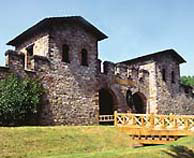 In the north
near Bad Homburg, north of Frankfurt and near the Brothers Grimm
Route (see Grimm
Fairy Tail Road), the Saalburg Fort
is the only reconstructed Roman fort of the Limes. Kaiser Wilhelm II,
fascinated with his family’s lineage authority claims to the Roman
Emperors (see Roman
Hall Residence Palace) ordered the rebuilding
of the fort in 1897, complete with all the buildings, fixtures and fittings
used in Roman times. The reconstructed fortress and open-air museum at
Saalburg presents displays and activities to evoke impressions of life
in the
Roman empire 2,000 years ago. Archaeological finds, displays and models
tell the story of the soldiers and show the daily life of the civilians
from the fort’s village, with reconstructed barracks, officer’s
dining room. Roman bread is baked in rebuilt ovens along the rampart
walk. Around the fort the „Saalburg Trail“ leads to a well-preserved
section of the original Limes. The trail passes additional ruins and
reconstructions of archaeological monuments like the Jupiter column and
Mithras Temple. Saalburg
Fort
In the north
near Bad Homburg, north of Frankfurt and near the Brothers Grimm
Route (see Grimm
Fairy Tail Road), the Saalburg Fort
is the only reconstructed Roman fort of the Limes. Kaiser Wilhelm II,
fascinated with his family’s lineage authority claims to the Roman
Emperors (see Roman
Hall Residence Palace) ordered the rebuilding
of the fort in 1897, complete with all the buildings, fixtures and fittings
used in Roman times. The reconstructed fortress and open-air museum at
Saalburg presents displays and activities to evoke impressions of life
in the
Roman empire 2,000 years ago. Archaeological finds, displays and models
tell the story of the soldiers and show the daily life of the civilians
from the fort’s village, with reconstructed barracks, officer’s
dining room. Roman bread is baked in rebuilt ovens along the rampart
walk. Around the fort the „Saalburg Trail“ leads to a well-preserved
section of the original Limes. The trail passes additional ruins and
reconstructions of archaeological monuments like the Jupiter column and
Mithras Temple. Saalburg
Fort
Neckar River Roman History
Along the Neckar River from Stuttgart to Heidelberg can be found several Limes sites at Walheim, Benningen and Heilbronn with the Roman castle ruins at Heilbronn-Böckingen. Neckar Limes
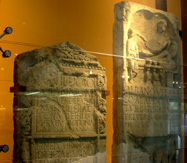 Other
Roman History can be found around Germany, not on the Limes which
formed the frontier but behind the border where the empire thrived.
In
Mainz can be studied Roman ship building and reconstructed Roman
Galleonsand the Roman Germanic Central Museum (see Mainz
Museums), in Cologne
near the rail station, the Roman-German
Museum (Römisch-Germanisches Museum) displays an impressive
collection of Roman art, glass, jewelry and sculpture, in Baden-Baden
you can
still take a dip in the Baths of the Emperor Caracalla (see Roman
Baths Baden-Baden),
and in Manching near Ingolstadt in the Roman and Celtic Museum (Römer
Museum) houses finds taken from what was the largest Roman settlement
in Germany, mostly covered by the airfield where the Messerschmitt
WWII fighter was born (see Deutsches
Museum Aviation). © Bargain
Travel Europe
Other
Roman History can be found around Germany, not on the Limes which
formed the frontier but behind the border where the empire thrived.
In
Mainz can be studied Roman ship building and reconstructed Roman
Galleonsand the Roman Germanic Central Museum (see Mainz
Museums), in Cologne
near the rail station, the Roman-German
Museum (Römisch-Germanisches Museum) displays an impressive
collection of Roman art, glass, jewelry and sculpture, in Baden-Baden
you can
still take a dip in the Baths of the Emperor Caracalla (see Roman
Baths Baden-Baden),
and in Manching near Ingolstadt in the Roman and Celtic Museum (Römer
Museum) houses finds taken from what was the largest Roman settlement
in Germany, mostly covered by the airfield where the Messerschmitt
WWII fighter was born (see Deutsches
Museum Aviation). © Bargain
Travel Europe
Best hotel and vacation deals in Franconia on TripAdvisor
These articles are copyrighted and the sole property of Bargain Travel Europe and WLPV, LLC. and may not be copied or reprinted without permission.
See Also:
SOMMERSDORF CASTLE HOTEL ON THE LIMES TRAIL
SCHLOSS EGGERSBERG CASTLE HOTEL - ALTMUHLTAL
MARKLIN MUSEUM - MODEL TRAINS IN GOPPINGEN
VERULAMIUM MUSEUM ST ALBANS ENGLAND
ROMAN VILLA RUSTICA – SAARLAND

