
TRAVELING EUROPE ON A BUDGET
Plan for the Bargains
 A bargain is the eye
of the beholder. A Rembrandt for under a million is a pretty good bargain
- probably fake, but that's for another forum. You
can travel with a first class budget or a student budget but
everyone
likes to
save
a
little
money,
whether you prefer 4 star travel and business or first class or if tourist
class with the comfort necessities will do. But what you're looking for
are some practical steps and information about going to Europe without
breaking the bank.
A bargain is the eye
of the beholder. A Rembrandt for under a million is a pretty good bargain
- probably fake, but that's for another forum. You
can travel with a first class budget or a student budget but
everyone
likes to
save
a
little
money,
whether you prefer 4 star travel and business or first class or if tourist
class with the comfort necessities will do. But what you're looking for
are some practical steps and information about going to Europe without
breaking the bank.
Agent, Tour, or Individual
It is possible now with all the various travel websites and search engines for hotels and airfares with a little effort to find the best price available for any given destination. But it does take a little searching. Sometimes a travel agent might be easier if you’re looking for a complicated itinerary. An agent may know of more techniques than you, but are essentially looking at the same information and may not be any more familiar with a particular destination than you are, but they do have brochures you can look at! Purchasing a tour from a provider large or small is also an option. Tour operators can get reduced group rates on some portions of a trip, but also need to make a profit. Some operators have tour packages specifially for the budget minded. Many have themed tours, eco tours, culinary tours, cultural or family tours (see Intrepid Family Tours).
Traveling on a budget on your own, whether for yourself, a couple, a family or a group of friends is as much a theory as it is practice. First, deciding where you want to go. Most people who want to go to Europe think of the culture, the history of the “old world”, cities and landscapes hundreds of years old as well as the mystique of kings and queens, the good food, local beers and wines from the source.
Where To Go
First decide what are your interests? Food and Wine tasting? Beer sampling? Cathedrals? Castles? Bucolic country scenes with cyling and and mountain hikes or eclectic night spots that stay up until the morning. Do you want to stay in one or two cities and explore them thoroughly, or do you want the experience of several different areas, cities or countries. Try to find areas that are not too far distant but provide a variety of experience. Combine Southern Germany with Northern Italy. Take the train from Munich to Milan across the Alps with a stop in Innsbruck Austria and the Trentino castle region in between (see Castles of Trentino) with a side trip to the Matterhorn in Switzerland. Or from Paris on the TGV to Nice in the South of France to the Italian Riviera (see Seaside Silencio). A Rail Pass can be very cost effective if the countries and cities are chosen with that in mind (See How a Rail Pass Works).
The value of the Euro is up, so the continent is a bit more pricy than it was, but not likely to change soon. England with its British pound can be more costly on average than Europe as a whole. There are many wonderful reasons to tour in the UK, but know that it will cost a bit more. The Eastern portion of Europe from the former East Germany to Czech Republic, Hungary, Bulgaria are by degree less expensive options, but rising as tourists discover them. However, for less experienced travelers or when not with a tour group, communication, amenties, standards and convenience can be a problem.
Class of Travel
What level of travel are you comfortable with, 5 Star luxury, 3 Star Comfort or a sleeping bag on the floor of the airport. If your travel plans include more than two stops, you can think about splurging a bit on a luxury spa in one location while saving on other destinations.
High Season / Low Season
Things to consider when to go. In Europe, one budgetary consideration are the seasons, not the actual changes in climate, but when the prices go up. High Season in Europe is usually from around the middle of June to middle September when prices are higher. Europeans mostly go on vacation in August. For an entire month they all just go, to other countries or around their own. That is probably not the best time compete for space, or find a lot of smaller businesses closed.
Seasons
Winter Spring Autumn Summer. If you like skiing or want to bundle up in an igloo hotel or explore Christmas markets and sip mulled wine (See Best Christmas Markets), the winter is the time to go. The weather in the northern countries (not counting Scandinavia) starts to improve in April and turn again in mid-November. Late spring and fall can be very interesting times to travel in Europe. Beer and wine festivals pop up everywhere (see Strong Beer Season and Bad Durkheim). In late autumn the truffle hunting season begins in Italy (see Piemonte Castle Hotels). The leaves turn the Black Forest orange. Rome can be 70 degrees as late as November and even in Hamburg an occasional rain squall may drift over the city in changing weather, but the sun will return for a crystal clear sky.
Language
One concern for English speakers without a foreign language is concern over communication. The best countries for finding English speakers in Europe, aside from Great Britain of course (though that may be a matter for debate), are the northern countries Germany, Holland, Denmark, Sweden, and international centers, Luxembourg and Monaco, where English as a second language has been mandatory in school for many years. Other countries of “old Europe” France, Italy, Spain, Belgium, Portugal, you will find English speaking assistance at most hotels and other tourist based businesses, but more of an issue when out in the countryside or at smaller businesses, restaurants, markets, gas stations etc. (see Five Magic Words of Travel).
Where tourism is common, it may be easier to find English assistance. Tuscany in Italy. In Northern Italy in the southern slopes of the Alps and Dolomites and the northern lakes German tourism is quite common so many of the services will be bilingual, but not necessarily English. With the common Euro, exchanging currency is much simpler than it once was. Switzerland still maintains its own Swiss Franc.
Money Exchange
Usually the most expensive place to exchange currency is at the airport or train station or those special tourist booths, though more convenient. If you use travelers checks, exchange them at a bank rather than a currency exchange. The cheapest way to get currency is with an ATM card, most which work around the world. The exchange rate is direct and the fees are fixed. Try to use them at a major bank and get enough at one time to keep the fees down.
Travel Mode
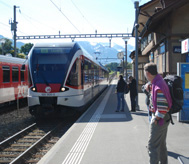
Things to consider when budget for travel, you can think about whether to take the train, rent a car of fly between cities (See Fly Drive Rail) but bear in mind the transfer cost of getting from the airport to a hotel. Train travel often allows you to walk to a hotel, air travel often requires a taxi. So add the cost of airport transfers to your budget for the flight. Low cost discount airlines like Ryanair offered a cheaper way of getting around, but new airport and security fees have made the incredible 1 Euro ticket a thing of the past (see Discount Airlines). Flying around Europe can be a value alternative over a long distance, but a night train can also be serve a similar need and save the cost of a hotel night (see Take a Night Train).
City vs. Country
The big cities are more famous and familiar, but hotels lodging prices can be significantly higher in the big cities, the difference between a 3 star comfort hotel room of 120 Euro in the city to 60 Euro in the country for a very nicely up-class bed & breakfast. Agritourismos in Italy are family farm houses throughout the country subsidized by the government and offering a countryside experiece for a very reasonable rate. As far as cities go, Berlin is probably one of the bargains as a major European capital, a luxury destination that because of the melding of old East into West hasn’t quite caught up to the Paris’ and Rome’s.
Good bargain
hotel rooms can be found in cities however, though be aware of special
events that
drive up
prices. Trade Fairs are common in some
market cities, Munich, Cologne and Frankfurt, Hannover in Germany can
be susceptible to the trade fair hike. Manchester and Liverpool in England.
Milan in Italy. The “star” rating of a hotel can vary by
country, but some very interesting and colorful places to stay can be
found in expensive cities at a good price.
Sight-seeing costs can add to the travel budget. Admission to events,
museums and the like can chip away at the budget. In tourism cities
there are combined tickets and passes that can reduce costs that may
well be well worth it. The London
Pass and the Great
British Heritage Pass in the UK. The Paris
Museum Pass in France. You
can always check with the city tourism bureau from combined museum
passes and other money saving ticketing options.
Food and Entertainment
Probably the most control you have over budget aside from hotel choice is restaurant and entertainment choices. Airport food can be quite expensive and not so good, while railway stations in Europe very often have food vendors for the local commuting traffic where the price is very reasonable. Quality level can obviously vary, but a sandwich at the bahnhof or gare for lunch can save for that lakeside wine gourmet three course meal under the sparkling lights. There are now American chain restaurants all over Europe, from the ubiquitous McDonalds to Pizza Huts and a number of others where you can cling to the familiar and save, while choosing when you want to sample the local cuisine and splurge on the grand meal.
Whether you want to go to a movie or see a play or go to the opera will be a matter of choice. Many European cities in the summer have free concerts in the open air. For seating up front, you’ll pay a price, but sitting on a hillside or outside table at a coffee house may be completely free.
Just a few ideas for a European vacation trip have been suggested here. Gather a little information, make a plan, even a a good idea to set out budget sheet with side by side columns for air fare, rail fare and car rentals plus fuel! and day by day hotel nights so you can compare the options. Bon Voyage and Gut Reisen! © Bargain Travel Europe
These articles are copyrighted and the sole property of Bargain Travel Europe and WLPV, LLC. and may not be copied or reprinted without permission.
See Also:
E-TICKETING OPTIONS ON RAIL EUROPE
CHEAP FLIGHTS ON CONDOR AIRLINES

